
When sourcing cotton tipped applicators for your practice, one question comes up quickly: does sterile or non-sterile actually matter for your applications? The short answer is: it depends on the procedure, and understanding the difference can protect both your patients and your procurement budget.
This guide breaks down what sterility means for cotton tipped applicators, when each type is appropriate, and what you need to know about Richmond Dental’s applicators before you order.
What Does “Sterile” Mean for Cotton Tip Applicators?
A sterile product has been processed (typically via autoclave, gamma radiation, or ethylene oxide/EO) to eliminate all viable microorganisms, including bacterial spores. Sterile cotton tipped applicators are sealed in packaging that maintains sterility until the point of use.
Non-sterile applicators are manufactured under controlled conditions to ensure cleanliness, however they have not undergone a validated sterilization cycle. They are appropriate for the vast majority of dental and medical applications that do not involve open wounds or sterile body cavities.
When to Use Sterile Cotton Tipped Applicators
Sterile applicators are required when the risk of introducing pathogens could directly compromise patient safety, for example:
• Open wound care or post-surgical site management
• Application to compromised or broken skin
• Contact with sterile body cavities
• Procedures governed by strict infection-control protocols that specify sterile materials
• Culture collection where sample contamination would affect diagnostic accuracy
When Non-Sterile Applicators Are Appropriate
For the majority of clinical dental and general medical procedures, non-sterile applicators are perfectly suitable. These include:
• Topical anesthetic delivery prior to injection
• Applying antiseptics, fluoride (SDF), or medicaments to intact oral tissue
• Moisture control and drying during restorative procedures
• Gentle tissue assessment and diagnostic probing
• Cleaning intraoral devices such as digital sensors and scanner heads
• Cosmetic and skincare applications
• First aid applications on intact skin
In these contexts, using sterile applicators adds cost without a clinical benefit. Non-sterile, medical-grade applicators are the standard of care.
Key Differences at a Glance
| Feature | Sterile Applicators | Non-Sterile Applicators |
| Sterilization process | Validated (autoclave, gamma, EO) | None; manufactured clean |
| Packaging | Sealed sterile barrier | Protective packaging; autoclavable option available |
| Typical use | Open wounds, sterile cavities, high-risk protocols | Topical medication, drying, device cleaning, assessment |
| Cost | Higher | Lower; standard for most procedures |
| Shelf life note | Expiry date on sterile barrier; discard if compromised | No sterility expiry; store clean and dry |
| Richmond Dental offers? | Not as standard supply | Yes, with sterilization-compatible autoclavable packaging |
Richmond Dental’s Applicators: Non-Sterile with a Sterilization Option
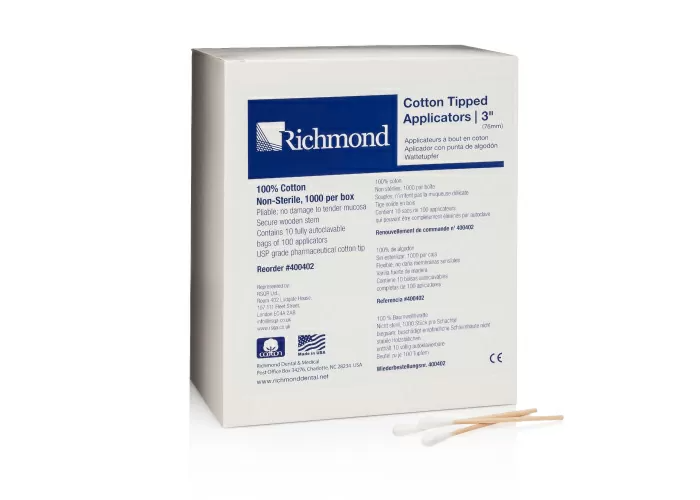
Richmond Dental’s cotton tipped applicators are supplied non-sterile, which is appropriate for the vast majority of applications they are designed for, including topical anesthetic delivery, tissue assessment, device cleaning, and moisture control.
For the packaging: they come in an autoclavable, sterilization-compatible bag featuring a colour-change indicator strip that visually confirms when a sterilization cycle is complete. This gives practices the choice to sterilize before use if their protocol requires it, with no need to source a separate product.
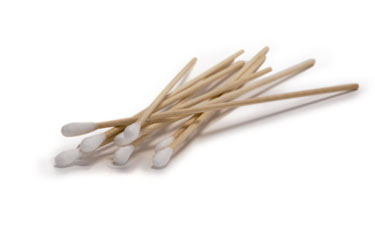
Available in 3″ and 6″ lengths, 100 per pack, they are trusted by dental, medical, and cosmetic professionals for consistent quality and reliable performance.
Explore Richmond Dental’s Cotton Tipped Applicators
Richmond Dental’s non-sterile cotton tipped applicators come in 3″ and 6″ sizes, packaged in autoclavable, sterilization-compatible bags with colour-change indicator strips. 100 per pack, 10 packs per case.
Frequently Asked Questions
Can I sterilize non-sterile cotton tipped applicators myself?
Yes, if the applicators come in a sterilization-compatible bag. Richmond Dental’s applicators are packaged in exactly this type of bag, complete with a colour-change strip to confirm cycle completion. Always follow your practice’s validated sterilization protocol and the manufacturer’s recommendations on the packaging.
Do I need sterile applicators for dental procedures?
For the majority of routine dental procedures (topical anesthetic application, moisture control, tissue assessment, and device cleaning) non-sterile applicators are appropriate and consistent with standard infection control guidelines. Sterile applicators would be required for contact with sterile body cavities or open surgical sites.
Should cotton tipped applicators be used in the ear canal?
This is worth addressing directly: Otolaryngologists (ENT specialists) strongly advise against inserting cotton tipped applicators into the ear canal. Far from removing earwax, the practice can push wax deeper, causing impaction. While general practitioners may occasionally use applicators in the ear or nasal cavity for specific purposes, ENT specialists consider ear canal use contraindicated. Richmond Dental’s applicators are designed for dental and general medical use, not ear canal applications.
What is the difference between sterile cotton tipped applicators and Q-Tips?
Q-Tips are consumer-grade cotton swabs not designed or validated for clinical use. Medical and dental cotton tipped applicators, like those from Richmond Dental, are made with 100% purified medical-grade cotton, tightly wound to ensure no fibre shedding, and available with sterilization-compatible packaging. They provide the precision, absorbency, and material quality required in professional settings.