

The choice between wood stick cotton swabs and plastic-stemmed alternatives may seem minor, but in clinical dental and medical settings it has real consequences for control, safety, and patient outcomes. Wooden stems have remained the standard in professional healthcare environments for good reason, and this guide explains exactly why.
Whether you are sourcing cotton swabs with wooden sticks for the first time or re-evaluating your current supply, here is what the evidence from clinical practice tells us.
What Are Wood Stick Cotton Swabs?
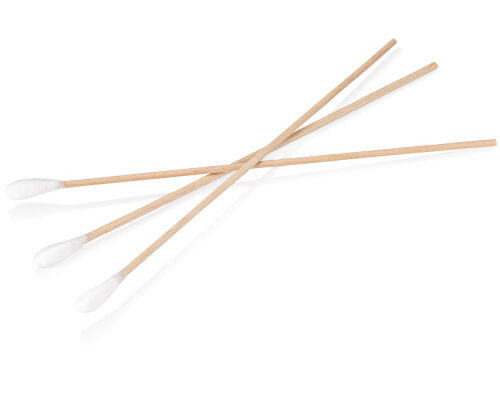
Wood stick cotton swabs, also called wooden cotton swabs or cotton tipped wood applicators, are single-use applicators consisting of a tightly wound cotton tip bonded to a sturdy wooden stem. They are distinct from consumer-grade cotton swabs (such as Q-Tips) in both construction and intended use.
In clinical settings, wood stick cotton swabs serve as precision instruments for:
- Topical medicament and anesthetic delivery
- Specimen collection and wound swabbing
- Moisture control during restorative procedures
- Soft tissue assessment and diagnostic probing
- Antiseptic and hemostatic agent application
- Cleaning and decontaminating intraoral devices
Medical-grade wooden cotton swabs, like those manufactured by Richmond Dental, are made from 100% purified cotton and purpose-built for the demands of professional clinical use.
The Case for Wooden Cotton Swabs in Dental and Medical Settings
Wooden stems have characteristics that directly support safe, effective clinical practice. These properties matter most.
Rigidity and Tactile Control
A wooden stem does not flex under the moderate pressure of clinical application. When applying a topical anesthetic to a specific patch of gingiva, or swabbing a wound site with a hemostatic agent, the clinician needs the tip to go exactly where it is directed. Plastic stems, particularly thinner ones, can flex slightly under pressure, reducing precision and tactile feedback.
Biodegradability
Wood is a natural, biodegradable material. In a clinical environment generating significant single-use plastic waste, this matters both for institutional sustainability goals and for facilities required to demonstrate environmental compliance. Cotton swabs with wooden sticks are disposed of as general waste in most jurisdictions, unlike plastic-stemmed applicators, which require specific plastic waste streams.
No Risk of Scratching Delicate Surfaces
Wire-stem applicators, occasionally still found in older supply chains, pose a scratch risk to intraoral devices such as digital sensors, scanner heads, and impression components. Wooden stems carry no such risk. They are firm enough for confident application but will not damage delicate equipment surfaces.
Wood vs Plastic Stem: Side-by-Side Comparison
| Property | Wood Stick Cotton Swabs | Plastic Stem Cotton Swabs |
|---|---|---|
| Rigidity | High; no flex under application pressure | Variable; thinner stems may flex |
| Tactile feedback | Excellent; direct feel through the stem | Reduced with flex |
| Biodegradability | Yes; natural wood decomposes | No; contributes to plastic waste |
| Scratch risk to devices | None | Low (but wire alternatives are a risk) |
| Patient comfort | Smooth, splinter-free surface | Smooth |
| Autoclavable packaging | Available (Richmond Dental) | Less common |
| Standard in dentistry | Yes | Less common in dental supply |
Plastic-stemmed swabs are common in consumer and cosmetic markets, but they have not replaced wooden stems in professional dental and medical supply. The clinical benefits of wood are well understood and broadly validated by long-standing practice standards.
Long Wooden Cotton Swabs: Best Uses in Practice
Long wooden cotton swabs, typically 6 inches in length, extend the reach of the applicator into areas that a standard 3-inch tip cannot access cleanly. In dental practice, this matters in several specific situations.
- Posterior oral cavity access: The back of the mouth, particularly the retromolar region and distal surfaces of second and third molars, is difficult to reach with a short applicator without the clinician’s hand entering the patient’s visual and tactile space. A 6-inch wooden cotton swab allows treatment of these areas while keeping the operator’s hand further back.
- Floor of mouth and pharyngeal areas: Specimen collection, antiseptic application, or assessment of floor-of-mouth lesions can require extended reach that 3-inch applicators do not provide.
- Medical settings: In general medical practice, long wooden cotton swabs are used for throat swabbing, wound care in deeper sites, and applying topical agents to areas where access is limited.
- Patients with limited mouth opening: Where trismus or restricted opening limits instrument access, a 6-inch applicator gives the clinician working room without requiring additional retraction.
Are Wooden Stick Cotton Swabs Sterile?
Richmond Dental’s wooden cotton swabs are supplied non-sterile, which is appropriate for the vast majority of their clinical applications. For routine dental procedures, topical anesthetic delivery, device cleaning, and tissue assessment, non-sterile applicators are consistent with standard infection control guidelines.
What distinguishes Richmond’s applicators is the packaging: they come in an autoclavable, sterilization-compatible bag with a color-change indicator strip that confirms when a sterilization cycle is complete. Practices that require sterile applicators for specific protocols can sterilize before use without sourcing a separate product.
For a full explanation of when sterile vs non-sterile applicators are appropriate, see our guide to sterile vs non-sterile cotton tipped applicators.
6-Inch vs 3-Inch Wooden Cotton Swabs: Which Size Do You Need?
Most dental practices stock both sizes. 3-inch wooden cotton swabs handle the majority of routine intraoral procedures, while 6-inch applicators are kept on hand for posterior access and any case requiring extended reach.
The quick guide:
- 3-inch: anterior and mid-arch topical application, cavity preparations, device cleaning, tissue assessment
- 6-inch: posterior access, floor of mouth, pharyngeal areas, patients with limited opening
Both sizes are available from Richmond Dental in the same medical-grade construction. For a detailed breakdown of applications by size, see our guide to 3-inch vs 6-inch cotton tipped applicators.
Frequently Asked Questions
What is the difference between wood stick cotton swabs and Q-Tips?
Q-Tips are consumer-grade cotton swabs intended for cosmetic and household use, not validated clinical applications. Wood stick cotton swabs for professional use, such as Richmond Dental’s cotton tipped applicators, are made with 100% purified medical-grade cotton, tightly wound to eliminate fiber shedding, and available with autoclavable packaging. They are designed specifically for dental, medical, and cosmetic professional use.
Are wooden cotton swabs better than plastic for dental use?
For dental applications, wooden stems are generally preferred. They provide better rigidity and tactile feedback than flexible plastic stems, are biodegradable, and carry no risk of scratching delicate intraoral devices. Wooden-stemmed applicators have been the standard in professional dental supply for this reason.
What are long wooden cotton swabs used for?
Long wooden cotton swabs (6 inches) are used when standard-length applicators cannot reach the treatment site comfortably: posterior oral cavity, floor of mouth, pharyngeal areas, or deep wound sites in general medical use. They are also useful for patients with limited mouth opening.
Can I get cotton swabs with wooden sticks in bulk for a dental practice?
Yes. Richmond Dental’s cotton tipped applicators with wooden stems are sold in packs of 100, with 10 packs per case, making them practical for high-volume clinical environments. Available in both 3-inch and 6-inch lengths.
Explore Richmond Dental’s Cotton Tipped Applicators with Wooden Stem
Richmond Dental’s cotton tipped applicators with wooden stems are available in 3-inch and 6-inch sizes. Medical-grade cotton, sturdy wooden stems, autoclavable packaging with color-change indicator strips. 100 per pack, 10 packs per case.