

Small supplies can make a significant difference in the efficiency and success of dental procedures.
Cotton pellets, a staple in dental practices for decades, play a crucial role in various dental applications due to their absorbency and ease of use. However, with advancements in materials science, alternatives have emerged.
Let’s compare cotton pellets and their alternatives, exploring the benefits and drawbacks of the options.
Role of Cotton Pellets in Dentistry
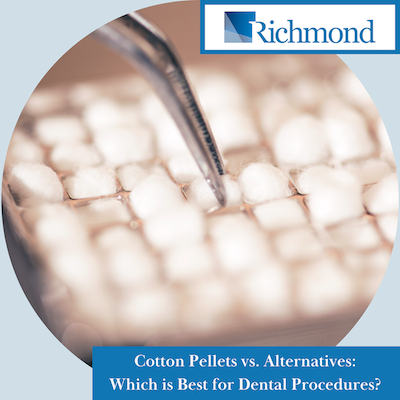
Cotton pellets are used in a variety of dental procedures, serving crucial functions such as medication application, moisture control, and wound management. Cotton pellets are small, absorbent, cylindrical-shaped wads of cotton used extensively in dental procedures.
Cotton pellets effectively soak up saliva, blood, and other fluids, creating a dry field for filling, extracting, and bonding procedures. They can be saturated with medicaments and applied to specific areas, such as after extractions or during root canal treatments. They can also help control minor bleeding after certain procedures and protect adjacent tissues during procedures like etching or bonding.
Richmond Dental & Medical, known for high-quality dental supplies, offers premium cotton pellets that dental professionals favor for their exceptional absorbency and consistency. Made from 100% purified, medical-grade cotton, Richmond cotton pellets ensure safety and effectiveness in dental treatments. Their uniform size and shape allow for precise placement and control, critical during delicate procedures.
To ensure optimal use, it’s important to select the correct size of cotton pellets. Learn more about how to size Richmond pellets.
Alternatives Pellets
While cotton pellets are widely used, there are alternative pellets made from synthetic materials such as polyester or rayon. These alternatives often claim to offer superior performance in terms of durability and non-linting properties. Some are also treated with chemicals to enhance their absorbency and strength.
Cotton Pellets: Pros and Cons
Cotton pellets offer excellent absorbency, effectively soak up fluids, and create a dry field crucial for many procedures. The soft and comfortable nature of medical-grade cotton minimizes patient discomfort, which is especially important during prolonged treatments.
Cotton pellets are also very versatile and suitable for a wide range of dental applications, from applying medications to controlling minor bleeding. Furthermore, the availability of both sterile and non-sterile options provides flexibility for various clinical needs.
Their biocompatibility, derived from 100% medical-grade cotton, reduces the risk of allergic reactions. The primary drawback of cotton pellets is that they can become saturated relatively quickly with excessive fluid, requiring replacement during lengthy procedures.
Rayon Pellets: Pros and Cons
Rayon pellets offer good absorbency, comparable to cotton in some cases, making them a viable alternative for fluid control. One advantage of rayon over gauze is that it produces less lint, minimizing the risk of fibers being left behind in the treatment area.
Rayon pellets are not as soft as cotton and may cause irritation or discomfort, particularly with extended use.
Gauze Pellets: Pros and Cons
Gauze pellets are readily available and easily made from standard gauze squares, making them a convenient and cost-effective option. However, gauze has a greater tendency to leave fibers behind, which can irritate tissues and complicate certain procedures. Gauze is also less comfortable than cotton, often feeling rough and abrasive to patients.
Finally, forming consistent and uniform gauze pellets can be challenging, potentially leading to variations in absorbency.
Synthetic Pellets: Pros and Cons
Synthetic pellets offer the greatest degree of variability in their properties, as they are made from various materials. They might offer unique advantages tailored to specific applications depending on the specific synthetic material used. However, this variability also means that the quality and performance of synthetic pellets can differ significantly between brands and materials.
Because synthetic pellets are a newer development in some cases, there also may be a lack of long-term studies regarding their effects within the oral cavity. Finally, there is potential for allergic reactions in some patients who may be sensitive to synthetic materials.
Why Richmond Cotton Pellets Remain the Preferred Choice
Despite the availability of various materials, cotton pellets continue to be the preferred choice among dental professionals for several reasons. First, their natural absorbency is unmatched, making them extremely effective for moisture control. Additionally, cotton is softer and gentler on the soft tissues of the mouth, which enhances patient comfort during procedures.
Richmond’s cotton pellets, in particular, stand out due to their consistent quality and reliability. They are manufactured to meet strict medical standards, ensuring each pellet performs optimally during use. Moreover, their environmental friendliness adds another layer of appeal, aligning with the growing trend towards more sustainable medical products.
Richmond cotton pellets offer a combination of absorbency, safety, and environmental sustainability that is hard to match. Learn more about Richmond’s cotton pellets and all our dental products today.
One thought on “Cotton Pellets vs. Alternatives: Which is Best for Dental Procedures?”
Comments are closed.